When customs clearance works well, it is almost invisible. Goods keep moving, and there is little reason to question the process. But smooth customs operations depend on getting many details right, and mistakes can lead to delays, unnecessary costs and compliance risks.
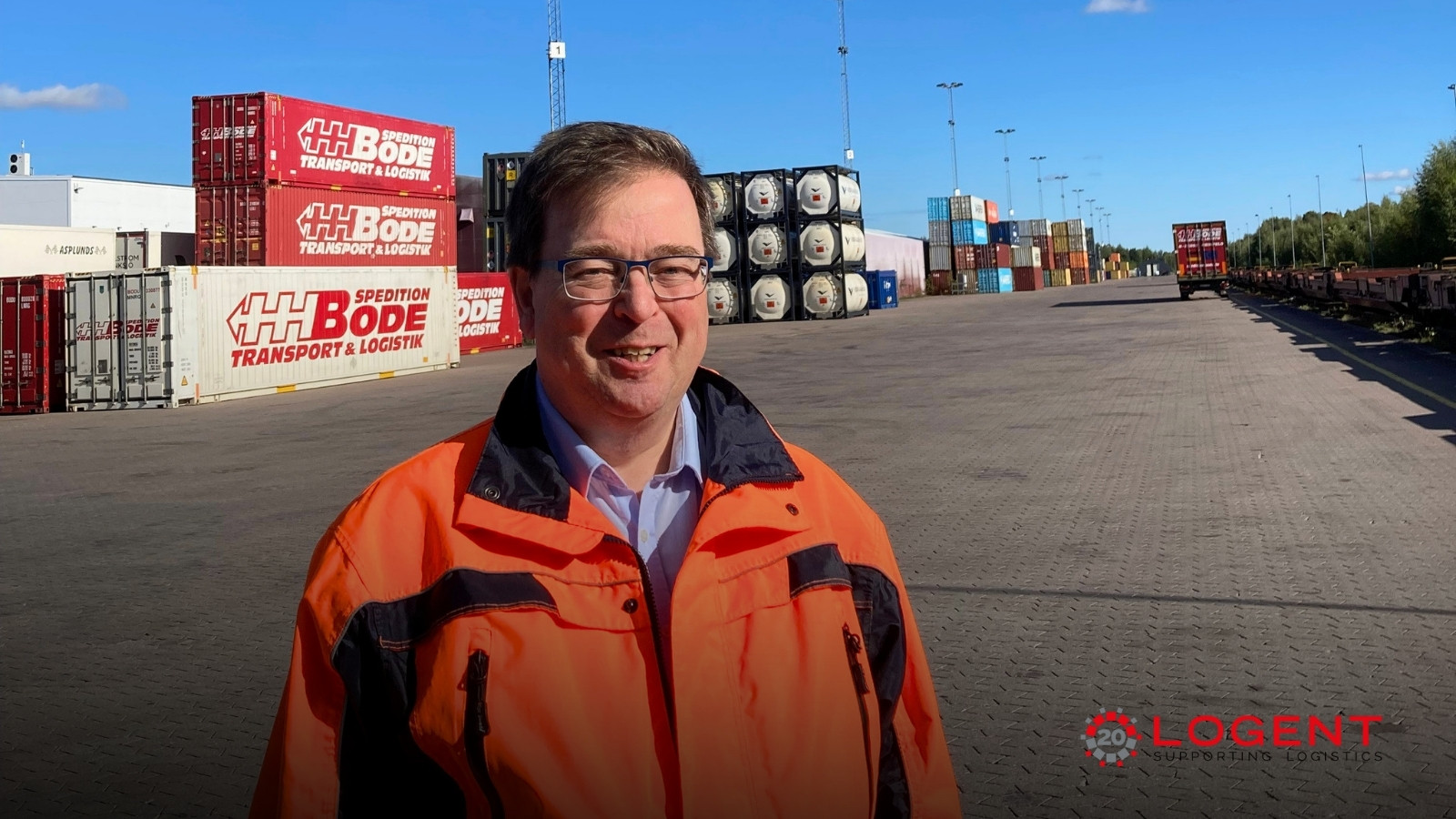
With a strong presence across the Nordic region and global networks, Logent works with customs flows that cross both EU and non-EU borders. Henrik Hansson, Business Area President of Customs at Logent, explains how expertise in customs clearance can support business performance, from ensuring compliance and avoiding unnecessary costs to adapting to changing trade flows and regulations.
What does customs clearance involve
Customs clearance enables goods to legally enter or leave a customs territory. It involves providing customs authorities with accurate information about the goods, including their classification, value and origin.
But it is more than submitting a declaration. The information provided determines how the goods are treated, including applicable duties, restrictions and other requirements. Getting it right is therefore essential for compliance, cost control and the smooth movement of goods across borders.
Why customs expertise matters
Many companies treat customs clearance as a natural part of the transport flow and have it handled together with the transport. This is often an efficient solution, but customs handling may take place in several stages and sometimes through external partners. For the declarant, it can therefore be difficult to gain full visibility into how customs clearance is carried out and whether it is optimized for the company’s specific circumstances. When shipments move smoothly, it is easy to assume that everything is working optimally, without taking a closer look at classifications, declarations or the customs setup itself.
“Customs is a bit like tax: when everything seems to work, few people want to look too closely. The challenge is that errors in customs declarations may go unnoticed for years and only come to light during an audit,” Hansson says.
For companies trading frequently across borders, even small errors can have significant consequences over time. Every customs declaration depends on information such as the correct tariff classification, value and origin of the goods. In the Nordic region, for example, customs clearance is part of everyday trade between EU countries and Norway.
“One of the most common mistakes is using the wrong tariff code. That can mean paying either too little or too much duty. It is usually not about negligence. Without deep customs expertise, a classification may appear correct even when it isn’t.”
When the same error is repeated across hundreds or even thousands of declarations, its cumulative impact can be significant. Customs authorities may review previous declarations, and if they find the same error, the company could face retroactive duties and penalties. In more serious cases, important customs authorizations may also be at risk.
A closer analysis of customs data can help companies identify potential compliance risks before they surface in an audit, while also highlighting where a company may be paying more in duties than necessary.
Customs expertise is therefore not only about getting individual declarations right. It can also help companies understand whether their customs processes are compliant, efficient and cost-effective.
Where companies may be leaving money on the table
Effective customs management goes beyond compliance; it involves understanding which procedures align best with a company’s trade flows and assessing the effectiveness of available customs arrangements.
“Companies may understand customs in theory. What they often lack are the specialist resources, practical experience or tools to apply that knowledge consistently in practice.”
Inward processing is one example of how the right customs procedure can reduce unnecessary costs. If a company imports goods into the EU for processing and then re-exports them, it can avoid paying import duties on goods that are not intended to remain in the EU.
Customs warehousing can offer similar benefits. It allows non-EU goods to be stored without EU import duties becoming payable while they remain under the customs warehousing procedure. Duties are paid if the goods are later released into the EU market, but if they are re-exported, EU import duties can be avoided.
Consider a company that imports goods from China into Sweden or Denmark but later ships some of them to Norway. By keeping those goods in a customs warehouse, the company can avoid paying EU import duties on goods that were only temporarily stored in the EU before being sent to another market.
That does not mean customs warehousing is always the most economical option. It also brings administrative requirements and costs, so the potential savings need to be weighed against factors such as trade volumes, duty rates and the share of goods that are subsequently re-exported.
“This is where customs expertise goes beyond getting the declarations right. A good customs and logistics partner should understand the company’s trade flows as a whole and identify how customs processes can be structured to minimize costs within the applicable rules.”
For companies with high trade volumes or goods subject to substantial duty rates, relatively small changes can translate into considerable savings. But the strategic value goes further: customs can also influence which logistics and delivery flows are commercially viable in the first place.
For a business selling across multiple markets, introducing a new delivery option may bring additional declarations, procedures and costs. With the right customs set up and greater automation, however, some delivery flows that would otherwise be too costly or complex may become viable.
Navigating changing customs regulations
Changes in customs regulation do not stay on paper for long. They can change what information companies need to provide, when it must be available and how goods can move across borders. Norway’s Digitoll reform and changes to EU rules for low-value e-commerce imports are current examples of regulatory changes that companies need to translate into their everyday operations.
“Keeping track of regulatory changes is one thing. The real expertise lies in understanding how they affect a company’s specific goods and trade flows and what needs to change in practice.”
This is where continuous customs expertise matters. A specialist can follow regulatory developments, assess which changes affect the business and translate them into practical processes rather than leaving individual teams to interpret new requirements when shipments are already on their way.
“Regulations will continue to change, and so will companies’ trade flows and business needs. The key is having the expertise to adapt customs processes along the way and make sure they continue to support the business,” Hansson explains.
For 20 years, Logent has partnered with customers to turn logistics challenges into opportunities. We look forward to exploring how our tailored solutions can support your business.